

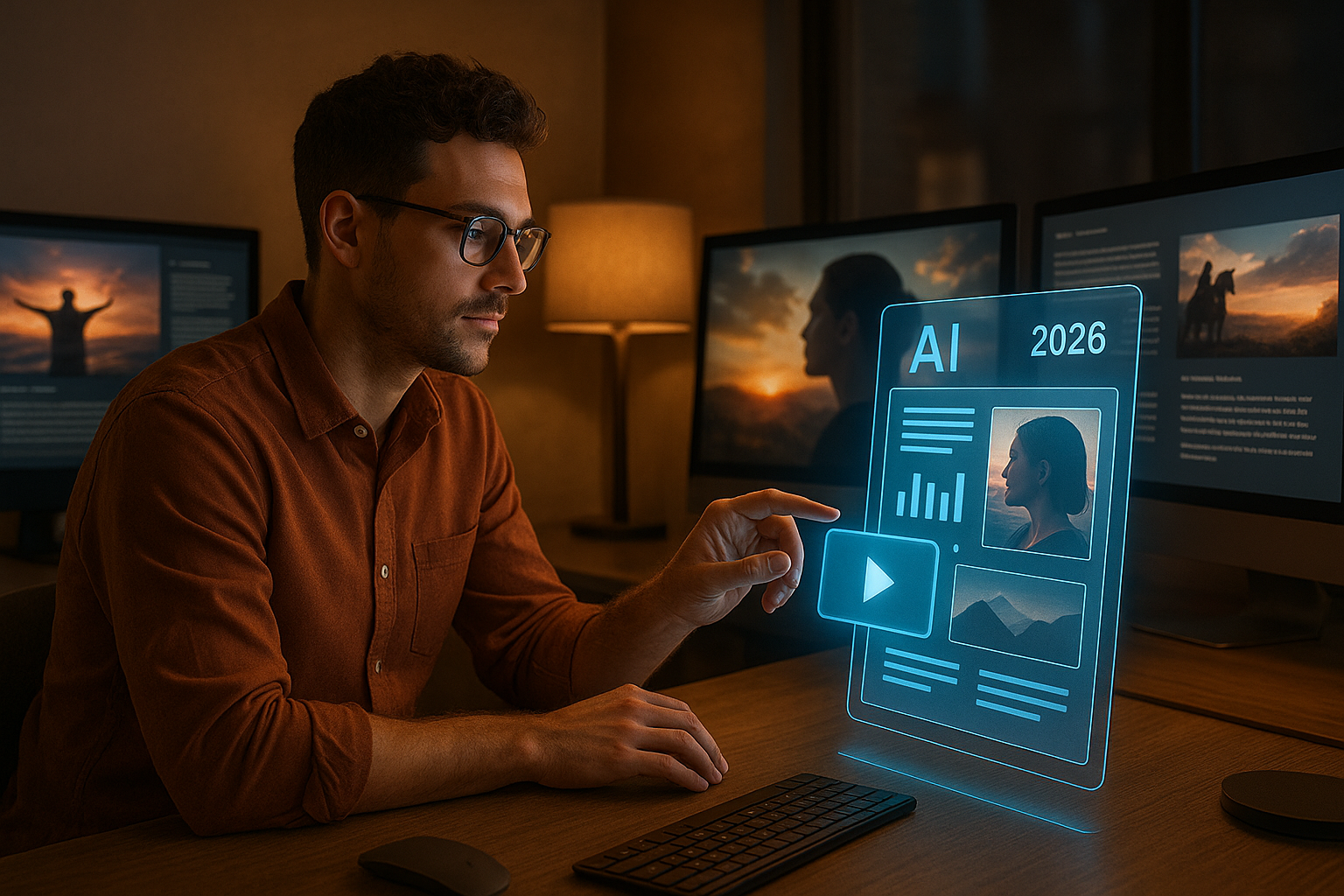
Introduction: The Year Before Everything Changes
If 2024 was about experimentation, then 2025 has been about integration.
Every marketer I speak to — from brand leads to agency owners — is wrestling with the same challenge: how do you stay creative and relevant when AI is rewriting the rules faster than any playbook can keep up?
At The Hybrid Production Approach event hosted by Tungsten Media as part of Leeds Digital Festival, that question took centre stage. We explored what “hybrid” really means for production, storytelling, and marketing workflows — and what brands should be doing now to stay ready for 2026.
Sitting alongside Andy from Tungsten, Chris from agency side, and Jon the director, I represented the brand perspective — how marketing leaders can make sense of all this change, and how to keep creativity valuable when content feels increasingly disposable.
Here are the big lessons from that conversation — and what I think every marketer needs to take into 2026.
Content Still Has Value — If You Treat It as a System
One of the first questions asked on the panel was simple: does content still have value?
My answer was a firm yes — but not in the way most people think.
Content is no longer a one-off campaign asset. It’s a compound asset — something that builds value the more it’s reused, adapted, and connected.
Too many brands still create content for a single campaign, then move on. But the real opportunity lies in structuring content so it can work harder across multiple touchpoints: search, paid, organic, social, and even new AI discovery surfaces.
In 2026, success will come from brands that design for reuse. Those that tag, version, and plan for modular storytelling will see their assets work 3–4 times harder, with less waste and faster turnaround.
It’s not just about producing more. It’s about building smarter systems around what you already have.
Efficiency Doesn’t Mean Less Creativity
A recurring fear in the industry is that efficiency kills creativity. I don’t believe that’s true — it just changes where the creativity happens.
When AI and automation take over repetitive or technical tasks, it frees human energy for concepting, strategy, and storytelling. That’s where your competitive advantage really lies.
On the Tungsten panel, we heard how production teams are already using hybrid methods — mixing CGI, virtual sets, and AI tools — to remove practical blockers like weather, travel, and time. The result isn’t “synthetic creativity.” It’s enabled creativity.
This approach also democratises storytelling. Smaller brands that once couldn’t afford big TV-style shoots can now create cinematic, scalable campaigns at a fraction of the cost.
The takeaway? Efficiency isn’t the enemy of originality — it’s the infrastructure that allows it.
Trust, Transparency and the New Creative Economy
If there was one word that dominated the panel, it was trust.
Trust in the technology. Trust in the process. Trust between brands, agencies, and production teams.
Many businesses are experimenting with AI, but without clear governance or communication. Others avoid it entirely out of fear. Both are risky.
The most forward-thinking brands are building cultures where experimentation is encouraged, not punished. They document their process, share learnings, and keep open dialogue between creative, marketing, and data teams. That’s transparency in action.
And that transparency builds resilience. When your teams understand why you’re trying something new — and how it fits into the bigger strategy — they trust it.
As I said during the discussion, the biggest risk isn’t moving too fast; it’s doing nothing at all. Waiting for the technology to settle is a guaranteed way to fall behind.
AI isn’t replacing people — it’s replacing processes. If we can embrace that reality, we’ll spend less time defending creativity and more time evolving it.
From Campaigns to Compounding: Building Marketing Systems That Scale
Most marketing teams are still trapped in a campaign mindset: launch, measure, move on.
But 2026 will reward brands that think in systems, not bursts.
A system-based approach means every piece of content is designed to connect, inform, and evolve. It means producing once and deploying many times. It means capturing in multiple formats, tagging for AI discovery, and aligning creative with SEO and paid media strategy from day one.
For small and medium businesses, this isn’t about more spending — it’s about smarter spending. Build your content pipeline around flexibility and reuse, and you’ll reduce costs while increasing long-term reach.
At Fleek Marketing, that’s how we think about modern brand growth: combining creativity with structure, storytelling with data, and long-term trust with short-term performance.
Because in the next era of marketing, the brands that win won’t be the ones making the most noise. They’ll be the ones building the clearest, most adaptable systems around their story.
The tools are ready. The audience is ready. The only question is whether your strategy is.
Acknowledgment
This article draws on insights from The Hybrid Production Approach panel, hosted by Tungsten Media for Leeds Digital Festival 2025, exploring how brands, agencies and producers are adapting to AI, virtual production and hybrid workflows in creative marketing.