


TLDR: Last week I sat on the dragons’ panel at the York and North Yorkshire Growth Hub’s Innovation Supper. Four early-stage businesses pitched, all solving very different problems. Strip away the products and every one of them was asking the same question: how do we get the right people to find us, trust us, and buy? That is a marketing question, and the founder who answered it most honestly is the one who won.
Quick links
- Four businesses, one shared question
- The winner won by naming her gap
- Why “reach everyone” is the most expensive plan in early-stage marketing
- Foundations come before visibility
- Activity is not progress
- What to do this week
Four businesses, one shared question
I was invited to be a dragon at the Innovation Supper, a grassroots pitching night the Growth Hub runs with York St John University. Four founders, ten minutes each, then questions from the panel and the floor. The audience votes, and the winner takes home seed funding on the night.
The four were as different as you could design:
A premium hot sauce brand built on natural ingredients and a family story from Ghana. A grief-support platform born out of the founder losing his wife to cancer. Portable heart screening that can pick up a life-threatening condition in a teenager before it ever shows a symptom. And a road safety venture trying to change driver behaviour where government has been too slow.
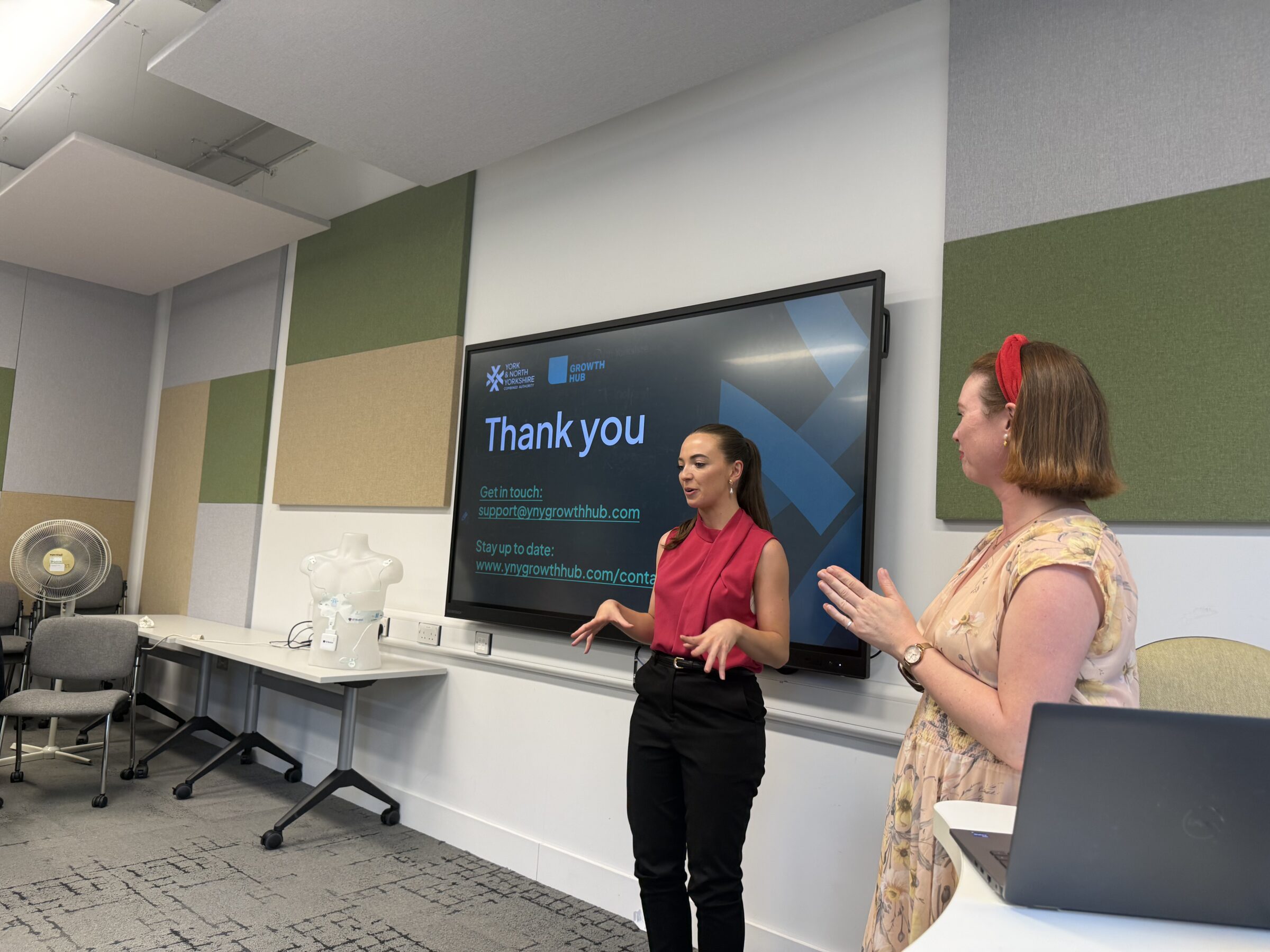
Different sectors, different stages, different money. But I sat there through all four and the same thing kept surfacing. Once you got past the product, every single one was really asking the same question.
How do we get the right people to find us, trust us, and buy?
That is not a product question. Every one of these founders had built something real. It is a marketing question. And it is the question almost every business I work with is actually asking, whether they have framed it that way or not.
The winner won by naming her gap
The business that won was Cardiologic Diagnostics. Faye started it after a teammate collapsed on the pitch during a football match and was found to have an underlying heart condition. She brought a portable ECG device into the UK that removes the need for a clinician to be on site, which means screening that used to be reserved for elite sport can reach grassroots clubs, schools and colleges.
Strong product. Real proof: a university and a college already signed up, a medical director on board, screenings already done. But here is what made her stand out as a commercial proposition. When she talked about what the funding was for, she did not dress it up. She said, plainly, the gap is marketing and content. She is making her own graphics, running her own social, and it is pulling her away from the work that actually grows the business.
That honesty is rarer than it sounds. Most founders, when asked where the gap is, reach for something safe. Faye named the real one out loud. And naming it is the first step to fixing it.
She won the room. I do not think that is a coincidence.
Why “reach everyone” is the most expensive plan in early-stage marketing
I only had time to push Faye on one thing, so I picked the one that mattered most.
She was about to put serious effort into social media to, in her words, reach everyone who might need the device. Schools, clubs, parents, first responders, the lot. And I understand the instinct. When your product could help almost anyone, it feels logical to talk to almost everyone.
But here is the trap. When you already know exactly who your customer is, broad social is mostly noise. You spend your scarcest resource, your time, casting wide when you could go narrow and direct.
Faye knows her buyers. The headteacher who signs off screening for a school. The club coach who brings it to a team. The parent who pays for their child. Three clear people. You do not reach those three by posting into the feed and hoping. You reach them by going straight at them: the right conference, the direct conversation, the targeted message to a named decision-maker.
This is the single most common mistake I see in early-stage marketing. Founders confuse reaching everyone with reaching the right one. The wider you aim, the more it costs and the less it lands. Precision is cheaper and it converts.
The room felt it too. She agreed, the audience agreed, and she walked away with the funding.
Foundations come before visibility
Watching four pitches back to back made something else obvious. Most of these businesses did not have a visibility problem. Not yet. They had already done the harder, more valuable work.
The hot sauce founder had a product people had paid real money for before launch. The grief platform had clinical content leads and insurers in conversation. The heart-screening business had universities signed up. The road safety founder had years of frontline experience and a clear plan.
The product, the proof, the passion. That is the expensive part, and they had it. What several of them were missing was a clear path for the right person to find it and a reason to trust it once they did.
That order matters. Visibility spend only pays off once the foundations underneath it are solid. Pour attention onto a business that cannot yet convert or absorb that attention and you waste it. Get the foundations right first, then turn the volume up. It is far less glamorous than a campaign, and it is almost always the right next move.
Activity is not progress
The thread running through all of this is a distinction worth holding onto. Activity is not the same as progress.
Posting every day is activity. Reaching the one headteacher who brings you a hundred screenings is progress. Being on every platform is activity. Owning the conversation with your actual buyer is progress.
Early-stage founders are some of the busiest people I meet, and a lot of that energy goes into doing more rather than doing the targeted thing. The discipline is not to add. It is to choose. If you could only do one thing this month to move the business forward, what would it be? Usually the answer is narrower, quieter and more direct than the plan you started with.
What to do this week
If you are early stage and you feel invisible, try this before you spend another hour on broad social.
Write down the one, two or three people who actually say yes to you. Not your audience, your buyers. The specific roles that sign, pay or refer. Then ask one honest question of every marketing activity in your week: is this getting me in front of those people, or does it just feel like progress? Cut the ones that fail the test, and put the time you free up into reaching your named buyers directly.
That is roughly what I said to a room of founders at York St John, and it is what I would say to you. The answer to feeling invisible is usually narrower than you think.
My thanks to Emma Rollason-Taylor and the York and North Yorkshire Growth Hub for the invitation, to York St John University for hosting, and to four founders who all stood up and backed themselves. Congratulations to Faye, thoroughly deserved.
If you are wrestling with where to aim, that is exactly the kind of thing I help founders and leadership teams work through. Get in touch if it would help to think it out loud.


