
Most businesses are still asking the wrong question about AI.
It is not “Which tools should we be using?”
It is “How do we make better decisions, faster, and at scale?”
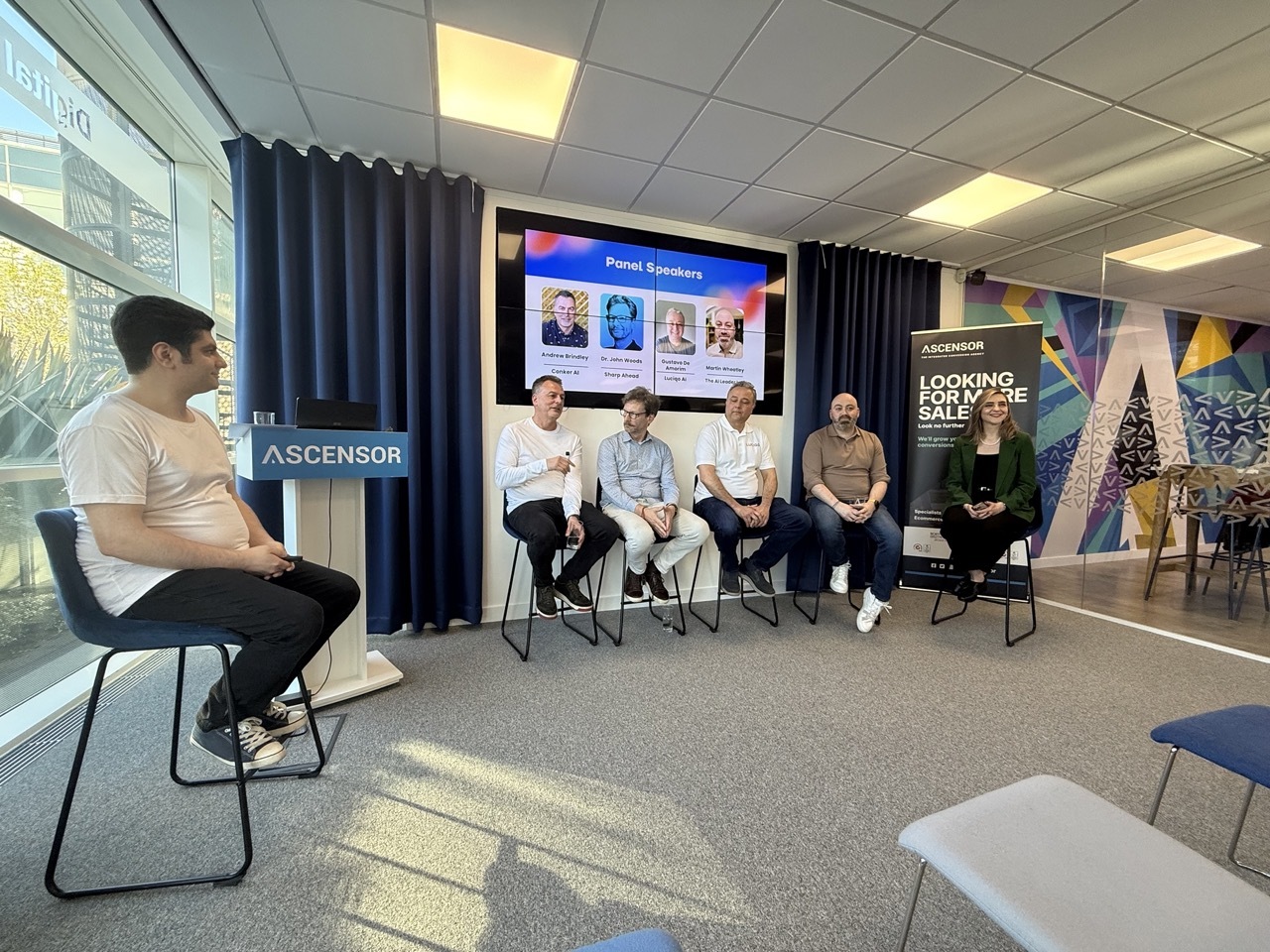
I was at the AI Confidence Meetup in Leeds recently, hosted by Behshad Mousavi and Dr Mina Tajvidi, with a panel spanning agency leaders, AI consultants and founders working at the front line of adoption.
What stood out was not the tools being discussed.
It was how quickly the conversation has matured.
Less focus on features, prompts and hacks. More focus on trust, responsibility, adoption and real business value.
That shift matters more than most businesses realise. But here is the uncomfortable reality: most businesses have not even started having this conversation yet.

The Echo Chamber Nobody Is Talking About
I was round at a friend’s recently. He works in software. Smart guy, big organisation, been in tech for years.
He had not heard of Claude.
I was genuinely surprised. If anyone was going to be across it, I assumed it would be someone in his world. But there it was.
And that moment crystallised something I keep seeing.
Those of us deep in this space are largely talking to each other. The discourse around AI tools, prompting strategies and adoption frameworks is largely happening inside an echo chamber. Meanwhile, the founders and leadership teams of scaling SMEs who stand to gain the most from this shift are still largely on the outside looking in, or not looking at all.
That is not a criticism. It is a business reality. They are running companies.
But it does mean that the gap between AI-enabled businesses and the rest is about to get much wider, much faster than most people expect.

The Shift from Tools to Judgement
The first phase of AI adoption was predictable.
Experimentation. Curiosity. Productivity gains.
Write faster emails. Generate content. Automate small tasks.
But that phase is already becoming table stakes.
The next phase is harder, because it is not about what AI can do. It is about how well your organisation uses it to make decisions.
AI is no longer a capability problem.
It is a judgement problem.
And that is where most scaling businesses are currently exposed. Not because their teams are behind, but because the leadership layer has not yet engaged with it as a strategic question.

Where AI Actually Creates Value in Marketing and Growth
There is still too much focus on AI as a time-saving tool.
Time saving is useful. But it is not where the real commercial upside sits.
Faster, better insight. AI compresses the time it takes to understand markets, customers and competitors. What used to take days can now take hours. But speed is not the advantage on its own. The advantage is arriving at clearer, more confident insight earlier. That changes how quickly a leadership team can act.
Sharper positioning. AI can generate options. It cannot define differentiation. Many businesses are producing more messaging, more content and more ideas than ever before. But without strategic clarity, that volume creates noise. Used properly, AI helps pressure test positioning and refine messaging. Used poorly, it creates generic output at scale.
Content and visibility. Average content is now effortless to produce. Authority is now harder to earn. Visibility is no longer about publishing more. It is about publishing with clarity, relevance and a clear point of view. For scaling businesses trying to build pipeline, that distinction matters enormously.
Better decision-making. This is where the real shift happens. AI can support decision-making across marketing, sales and leadership. It can challenge assumptions, model scenarios and surface patterns. But it cannot own the decision. Without strong commercial judgement, it can just as easily reinforce the wrong direction.
The Hidden Risk Most Leaders Are Missing
The biggest risk is not AI hallucinating.
It is businesses becoming more confident in the wrong things.
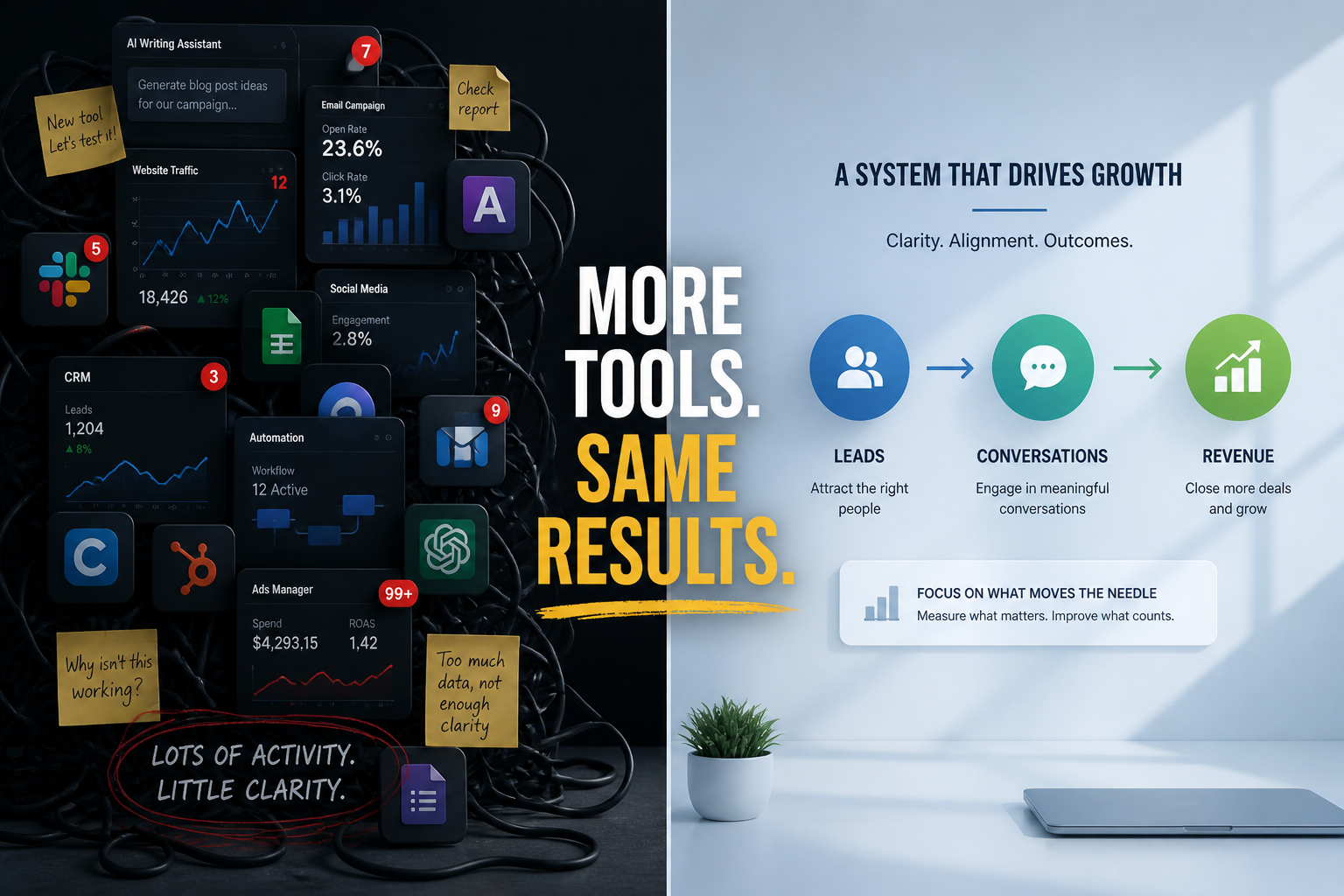
More content. More activity. More output. But less alignment, less clarity, less impact.
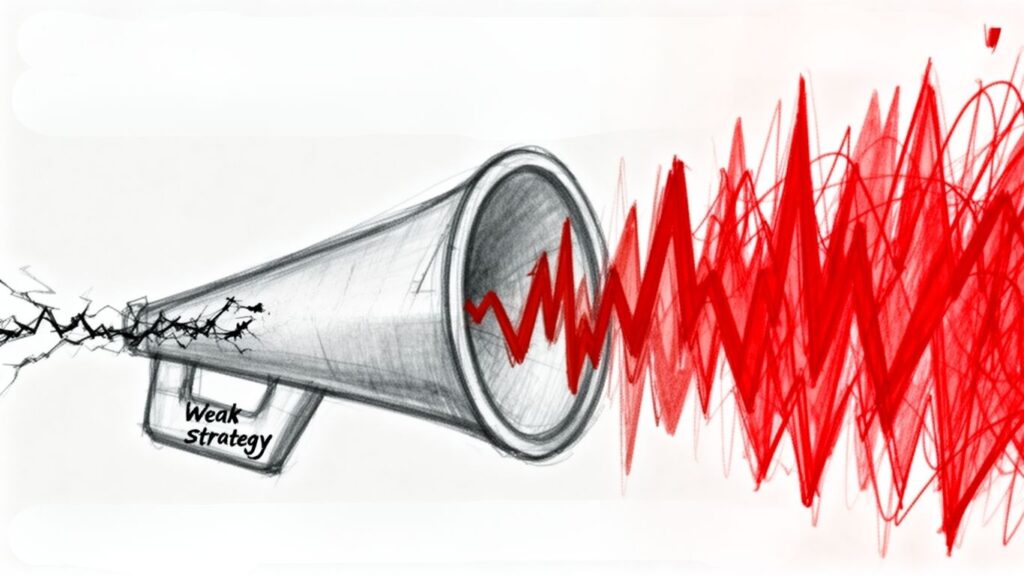
AI amplifies whatever is already there.
If the strategy is strong, it accelerates growth. If the strategy is weak, it accelerates waste.
AI does not remove bad strategy. It scales it.
And there is a second risk that almost nobody is talking about: platform dependency.
I have spent years building inside tools, workflows and ecosystems. Some of that investment compounds beautifully. Some of it becomes a trap.
Think about the context, prompts and institutional knowledge some businesses have built inside ChatGPT over the last two to three years. Now think about what happens if the tool changes, the pricing model shifts or something better comes along.
That dependency is real. I have felt it myself.
The smarter approach, especially for businesses at the scaling stage, is to build with portability in mind. Use connective tools that sit above the AI layer. Build your knowledge and systems in places you can move. Treat any specific AI tool as a component, not a foundation.

The Bubble Nobody Wants to Mention
Here is something I said out loud at a session recently that got a few raised eyebrows.
The AI bubble is going to burst. At least in its current form.
The economics do not add up. These tools cost more to run than they charge for. They are buying growth and data right now, not running sustainable businesses. ChatGPT has already started signalling moves toward advertising. Others are experimenting with consumption-based pricing that will change the maths for businesses currently on flat-rate subscriptions.
I was at a panel event recently with some serious AI practitioners and this was not a fringe view. It was a shared one.
None of this means AI is going away. Of course it is not. But it does mean the landscape in 12 to 24 months will look different. Tools that feel dominant now may not be. Pricing structures will change. Some platforms will not survive.
Which brings me back to the point about judgement.
The businesses that navigate this well will not be the ones who picked the right tool in 2024. They will be the ones who built adaptable systems, retained human decision-making at key points and treated AI as a layer rather than a destination.

Why AI Adoption Fails in Scaling Businesses
In scaling SMEs, the pattern is becoming familiar.
There is energy around AI. There is experimentation. There are pockets of progress. But there is no integration.
The common failure modes are not technical:
- No clear growth strategy to anchor AI usage
- Marketing and sales still operating in silos
- Leadership not directly engaged in shaping how AI is used
- Over-focus on tools, under-focus on outcomes
- No accountability for commercial impact
This creates a situation where AI is used, but not leveraged. Activity increases. Results do not follow.
The leadership team sees the headlines, approves some spend and assumes the team will figure it out. But the team needs direction, not just permission.

What Good Looks Like
The businesses starting to get real value from AI are doing a few things differently.
They are not chasing every tool. They are building AI into how the business operates and how decisions get made.
That looks like: AI aligned to clear growth objectives. Defined roles for AI across marketing, sales and leadership. Human judgement retained at key decision points. Teams trained to think critically, not just prompt. A focus on visibility, pipeline and revenue, not just output volume.
In other words, AI becomes part of the growth system, not an isolated experiment that runs alongside it.

AI Confidence Is a Leadership Issue
One of the most important takeaways from Leeds was this.
AI confidence is not a technical issue. It is a leadership issue.
It sits at the intersection of strategy, risk, decision-making and capability building.
The organisations that move fastest are not the ones with the most tools. They are the ones where leadership teams are actively engaged, asking better questions and setting clearer direction.
If you are a founder or MD of a scaling business and you have delegated AI thinking entirely to your team, that is the gap worth addressing first.
The Real Divide in the Next 12 to 24 Months
AI will not slow down. The tools will improve. The costs will shift. The capabilities will expand.
But the gap will not be between businesses that use AI and those that do not. That gap will close quickly.
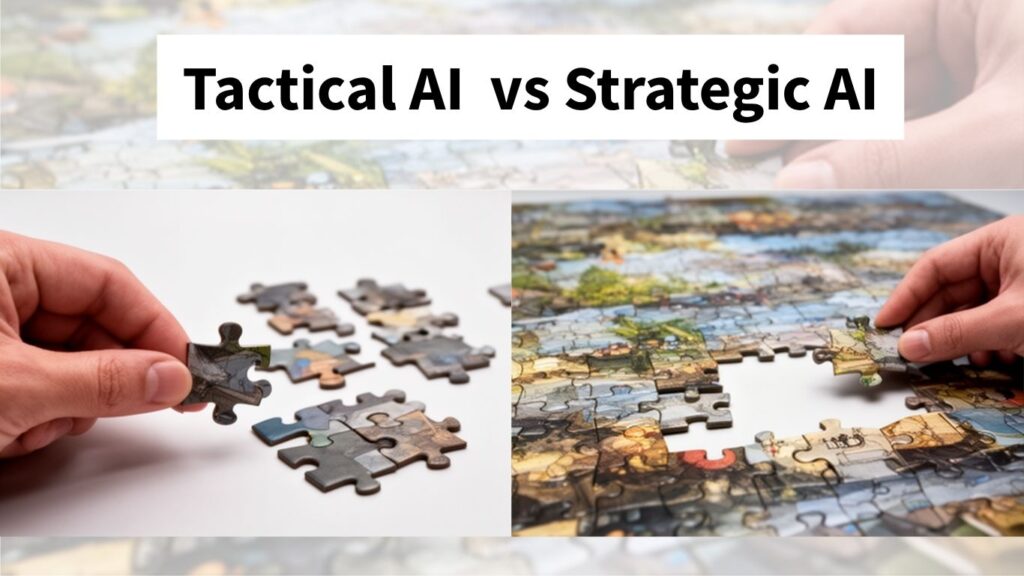
The real divide will be between businesses that use AI tactically and those that integrate it strategically.
Tactically means saving time on tasks.
Strategically means making better decisions, building stronger pipelines and compounding commercial advantage over time.

Final Thought
AI is not the advantage.
Better decisions, made faster and more consistently, are.
The businesses that win will not be the most AI-active. They will be the most aligned, the most focused and the most commercially clear about where AI actually drives growth.
That starts with leadership asking better questions.
Not “which tools are we using?” but “what are we trying to build, and how does AI help us get there faster?”